 With just eggs, flour, and water, and perhaps some help from a little bird, I experience religion in its most basic form.
Part 1: Gimme That Ole Time Religion
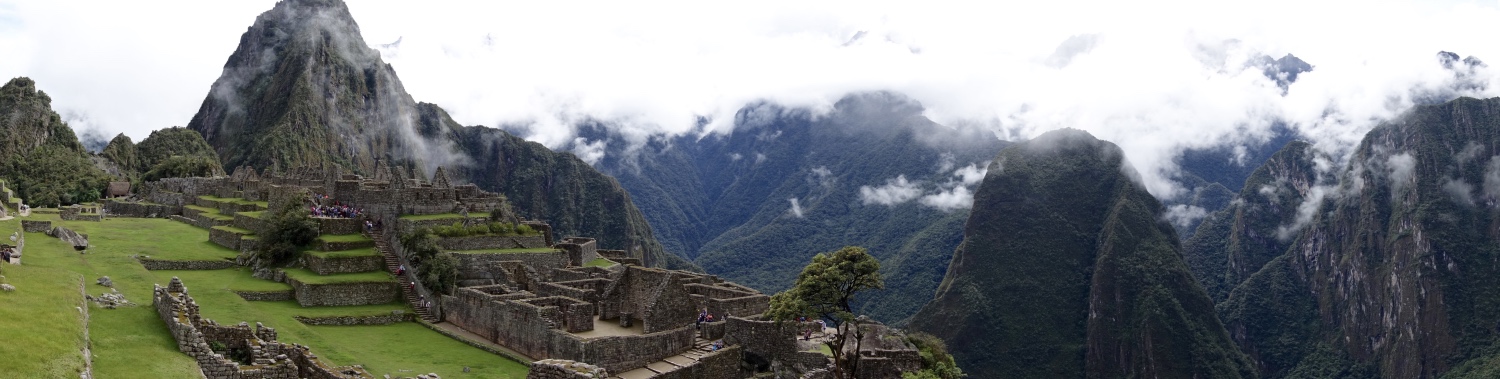
Chimborazo sits in the clouds, with its head rising more than 20,000 feet above sea level. Only on rare occasions will it allow us a brief view, and at that, usually only for minutes at any one time. Yet on these rare times of peek-a-boo visibility we can feel how much its presence determines the life around it. The volcano creates the weather for many miles in all directions by trapping moisture from the heavy clouds as they pass by, then collect on its flanks, and finally disperse and pass on. The surrounding lands accept these concentrations of moisture and provide the people who live here with truly abundant harvests of fruits, vegetables and dairy produce from the lush green fields.
Guaranda, at the base of Chimborazo, is the capital of Bolívar province. This city of at best 50,000 people hosts what is considered to be Ecuador’s most authentic indigenous pre-Lenten Carnaval. Both Ecuadorians and visitors alike reserve beds as much as a year in advance for this most important of religious events. Not only does this Carnaval mark the start of the Catholic religious period of resurrection with its culmination at Easter, but it marks the New Year for the indigenous Kichwa who inhabit not only Ecuador, but the other Andean countries of Colombia, Peru, and Bolivia. The crowds of spectators (and boundaries blur between spectators and participants as events progress) fill every room in every hotel both in Guaranda and in the surrounding pueblos.
So when I received an invitation to attend the Carnaval, less than a week before it was to take place, I had serious doubts about pulling this off. Firstly, my grasp of Spanish is now less than basic. After 3 years of not practicing the language, I discover daily that I have forgotten more than I remember. Thus my Spanish teacher certainly earns her salary, trying mightily to create her own version of the resurrection: my ability to converse again with those around me. The best of luck to you, Raquel Davalos!
The second obstacle (and the more immediate one) to witnessing Guaranda’s Carnaval was the simple fact that all rooms in all hotels, hostels, boarding houses, and elsewhere were full. There truly was no room at the inn for this traveler.
Yet somehow I found myself totally immersed in the indigenous New Year living with the Family Moposita, having arrived in Guaranda by a 7hr bus ride in horrendous traffic. I was traveling with their youngest son Joffre. He and I have become fast friends in Quito where we exchange language lessons. Joffre, or Jefferson as he prefers, is a mechanical engineer. But he is unemployed because he cannot speak passable English. So we meet most days of the week and laugh a lot, and hopefully benefit each other by speaking our respective languages.
Jefferson’s father is a plumber in Guaranda. His mother, who only wears the traditional dress of Bolivar province and speaks her Spanish with a heavy Kichwa accent, seems to have taken, along with her husband, lifetime vows of poverty. They live in a partially completed house with an outside hose-bib for water and single light bulbs, precariously wired in several rooms of the unheated concrete and block house.
They live this way in apparent content, with Jefferson’s mother enduring bitter cold by cooking outdoors in a semi-walled area open to the skies. She cooks simple but delicious meals over a kindling fire and I never saw her once without a smile. They live this way by choice since rather than investing in their own comfort, they have chosen instead to invest in their children.
Anita, the oldest daughter, is a physician working in a clinic in Quito and expecting her first child. The youngest, Sandra, has just completed her first year of construction engineering at a private university, also in Quito. The 3 other children, each married and 2 of them with children of their own, live in Quito as well, which meant that this was a great homecoming, with all 6 children, 4 spouses, 2 grandchildren, and an old gringo filling the usually empty and very cold house.
We had all come to see the Carnaval, but first we had to acknowledge and celebrate the New Year. And that’s when the little blue bird really did fly up my nose.
End of Part 1
 Wandering and Wondering Through South America