Category Archives: Uncategorized

Guaranda, Finally. But Never What We Think

Guaranda, Part III

With the coming of the New Year, as it had been in many of our “developed” cultures in times past, each family of the Campo greets the other families wishing them well, and this year the Moposita family was the first one out of the shute, as it were. It must have been 10 or 11 in the night when we began this New Year’s version of the custom of serenading the surrounding families. Keep in mind that we had been flying with Pajaro Azul since mid-afternoon, so it took major commitment from the entire goup (5 of us) to hang together on pitch black footpaths or trampling through cornfields, finally stumbling into courtyards of the families nearby. As soon as we arrived, though not silently what with the barking dogs, honking geese, and our own laughter, we began to sing and play this song. Or, in my case since I didn’t know the words, kind of hum and moan and clap my hands, which actually I was pretty good at. Well, that’s how I remember it anyway so I’m sticking to my story.

The other part of the tradition requires that each of the families being serenaded bring out yet more cerveza (beer) and/or Pajaro Azul. This being the campo, and like virtually all farming communities worldwide, folks are early to bed, early to rise. So when the lights turned on in the houses we visited, and the head of the household appeared in the courtyard with a glass and the booze, imagine his, or occasionally her, surprise to see a gringo in the midst of the neighborhood troubadors! Most were quite taken aback, and one or 2 even stumbled in surprise, but none paused in pouring out salutes to health and good harvest. A good time truly, was had by all.

Yet while the campesinos had either started or were soon to start celebrating good fortune and bountiful harvest in the new year, it was anything but good fortune for the pig. His year was starting out badly and went downhill from there.

Jefferson’s father had arrived home well after midnight, having begun the celebrations with friends in other places. We had brief introductions as I was headed off to bed. He seemed to be struggling with the remembrance of just why this tall gringo was standing in his house. He wasn’t angry by any stretch, the Blue Bird sings songs of love, though he was sorely and profoundly puzzled.

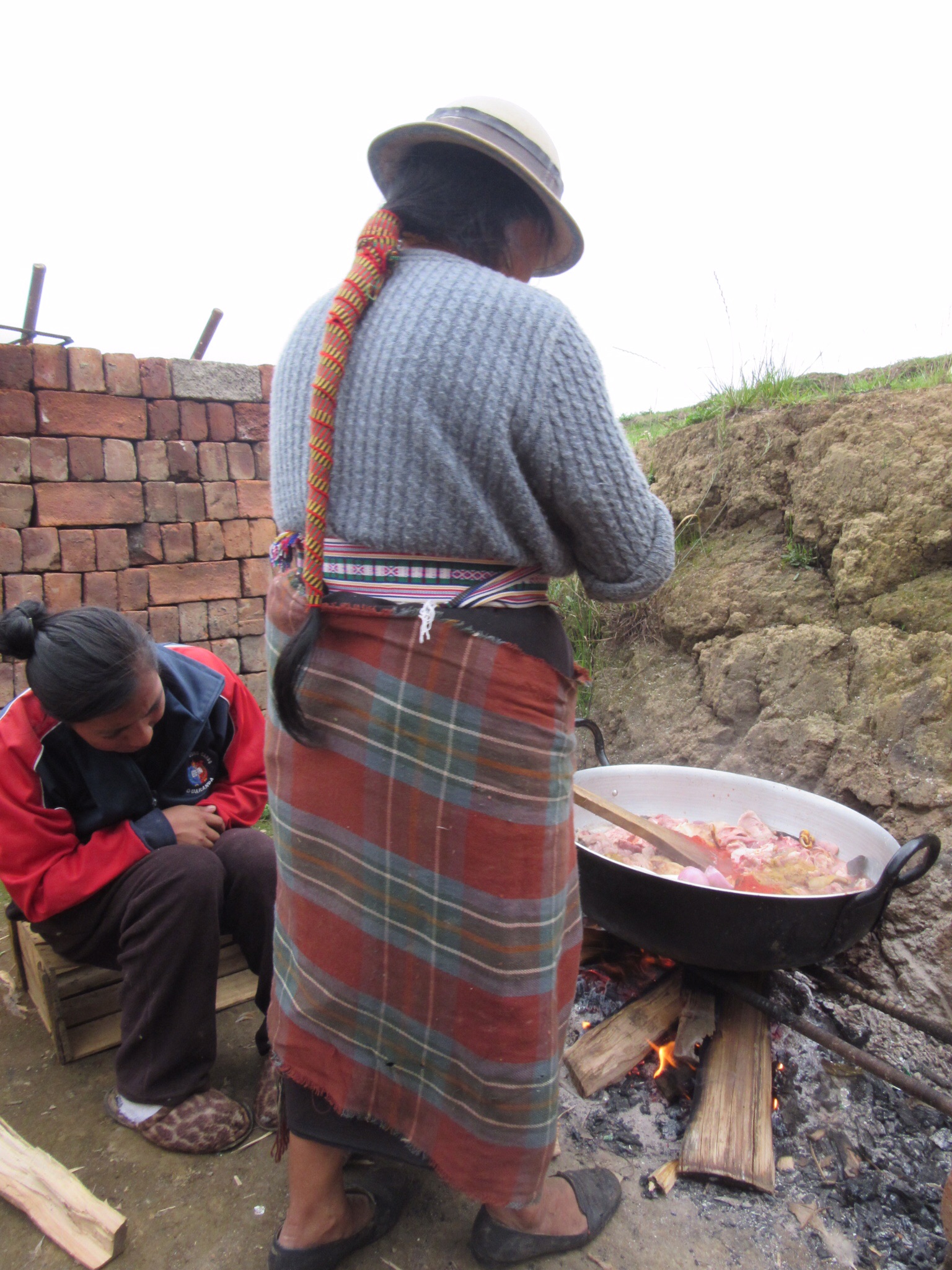
But while I was soundly asleep, snoring and drooling, he was sharpening his killing blade. After the deed, and the singeing of the hide with his plumber’s torch, his work was done and the women’s had just begun. His wife began first by scraping the hide, gutting and then sectioning the carcass. She, with help from an ever-changing number of daughters, spent most of the day first butchering then cooking the pig in a gigantic wok-type of pan/pot/whathaveyou.
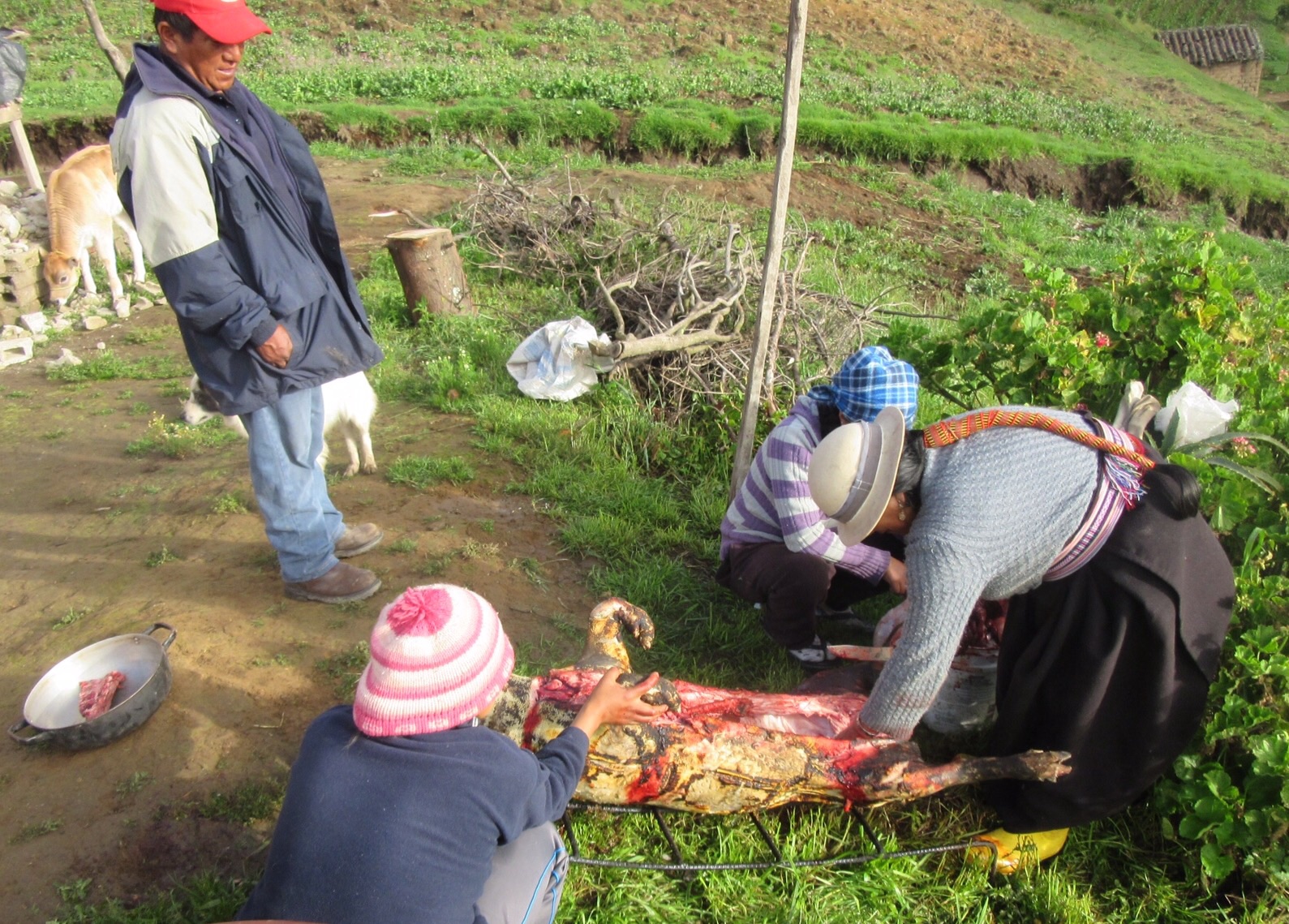
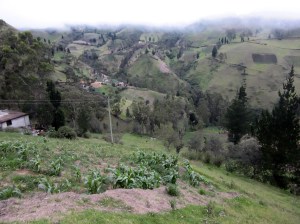
imageWhile she was building up steam for the task ahead, Jefferson’s father (I never did learn the names of Jefferson’s parents) took me with him for an early-morning wake-up over at his neighbor’s place. As we walked over there, he explained to me the purpose of a gulley that was obviously hand dug along the top of the ridge we followed. I had seen it earlier and thought it curious since it appeared to me as if it were a revetment, designed for fending off invading barbarians. The reason, though not so exciting, was still interesting. This ditch is the traditional way for the indigenous families to mark off boundaries between their separate properties. I’m thinking that few of the lands here are registered with any governmental agencies, and surveyors be damned, so this is an effective way for clear and permanent delineation between neighbors.
image

At the neighbor’s house we were offered the red-eye special: fried chitlins in choclo with an aji salsa that cleans the rust from your pipes, washed down with, of course, more booze! Choclo is one of about 7 different types of corn grown in Ecuador. The kernels are huge, the spherical size of a nickel or so, and the aji (pepper) salsa is unique to each family and having grown up with hot and spicy food, hit the spot. Beer for breakfast? Not so exciting, but customs in the hills developed for good reasons and it was not for me to question.
image

Back at the house the family was split into 2 factions with one group up to their elbows in pig and the other group getting ready for Guaranda’s Carnaval. As the honored guest, my role had already been defined before I even arrived from Quito, so I boarded another death-ride taxi for a pell-mell dash down the mountain to town. By now it was mid-morning and the parade had already begun. So we squeezed in amongst other revelers to take in whatever happened next.

And what happened next was a traffic jam. A mile from town the dirt road, and all the other ways into Guaranda were blocked. Cars, and more often trucks, handcarts, and the ocasional dumptruck(?) were haphazardly stacked up, one behind or beside the other, so we abandoned the taxi and boosted the children on our shoulders, making the last part of the trek on foot. The city streets were awash with parade-goers and certainly the party was in full-swing.

Before leaving Quito, my host family had provided me with an image of mayhem and wild destruction awaiting the unwary wanting to see a true Andean Carnaval. And in the years past, when both my generation and ones following took part in the festivities this was truly the case. But Ecuador has cleaned up its festivals so in comparison to days past this Carnaval was almost genteel, though not quite.

People of the Andes have for centuries marked the new year with blood all-round. The killing of the Moposita Family pig was certainly part of it, and from the squeals coming from other campesino family compounds it was easy to tell that they too added their parts to the rituals. Though community Carnavals are where this is most evident.

In days past, and still in many parts of Peru and Bolivia, ritual blood-letting was/is not only accepted but strictly enforced. Rival teams of men and youth would confront each other throughout the Andes and trade blows to the head with the expectation that resultant flowing blood would supply Pachamama with the energy she needs to ensure the harvest of the New Year. I’m glad that, at least in Ecuador and Colombia, things have toned down a bit.
imageHowever I was warned that instead of flowing blood I could and should expect raw eggs along with flour missiles and water bombs. So I came prepared, decked out in full-body rain gear, virtually head-to-foot in rubberized clothing. Man, was it hot! Well this year, the eggs are gone, the flour use is pretty trivial, and what is the weapon of choice, excuse me, the expression of joy, is shaving cream; boatloads and boatloads of shaving cream. But not your store-bought Schick or Gillette cans of personal grooming.

There were hawkers parading up and down the street between us, the beer vendors (by the glass or the case), umbrella sellers, and the actual parade participants, selling aerosol cans 18-24” high, and packed with high-pressure shaving cream. These cans allowed the gunners using them to float a focused stream of shaving cream 20 or 30 feet into the crowd. Which they did. We, all of us, found it in our hair, faces, front and back, down the back of the neck. Then there were the youths on the roofs of the buildings above us: ready, willing, and quite able to drench all of us with water balloons. And they too did, often and with great accuracy.
image

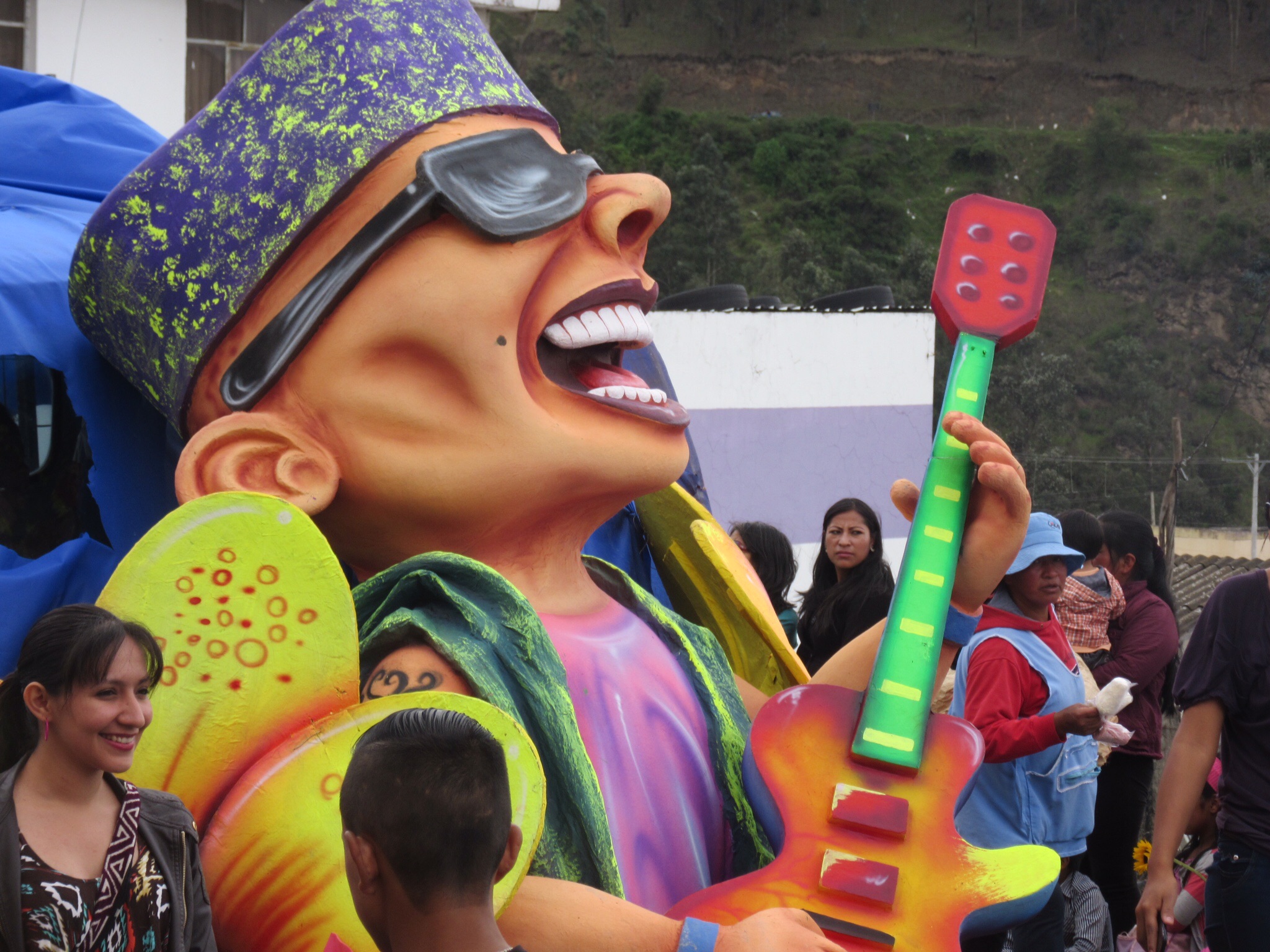
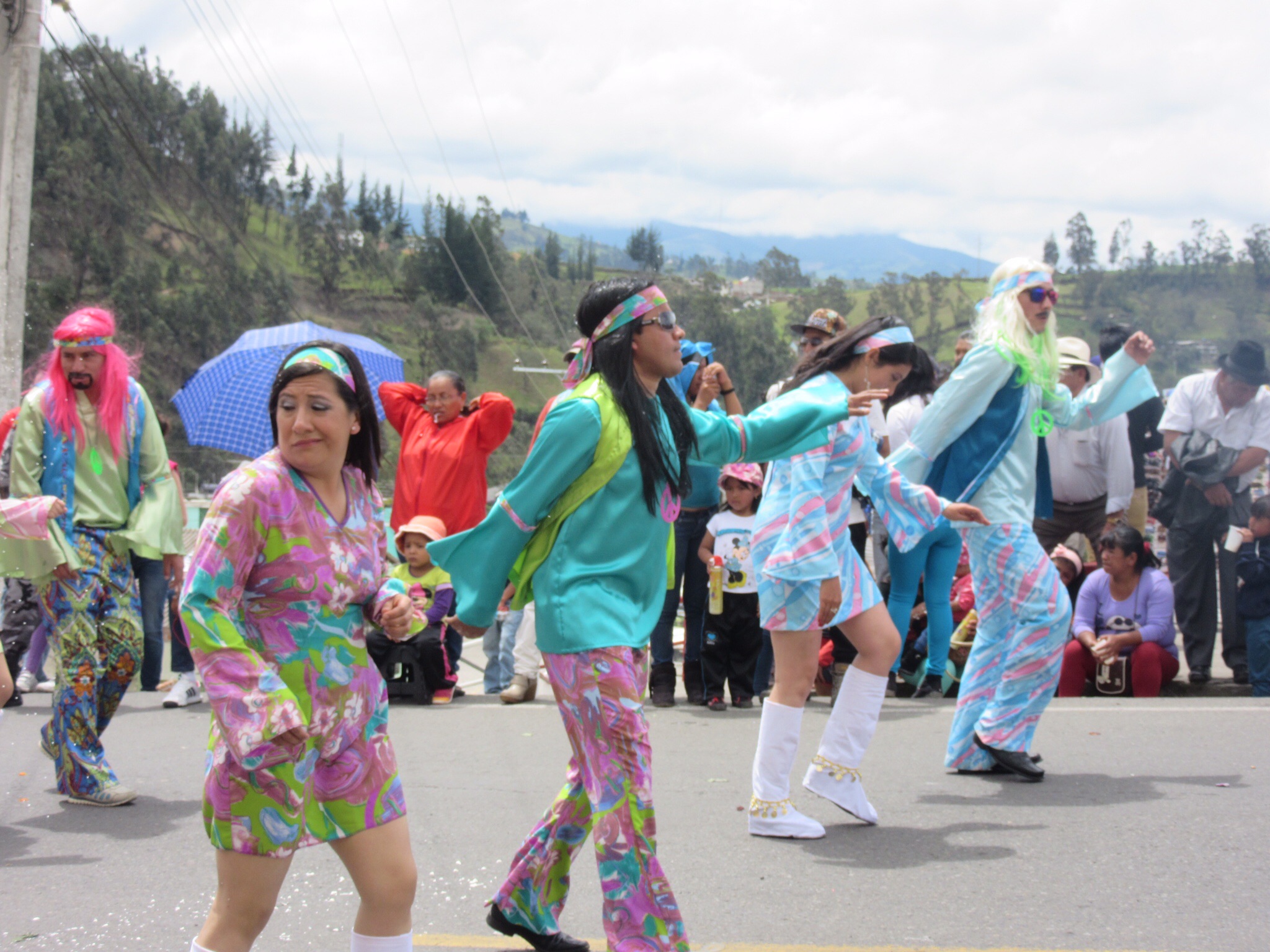
The actual parade was itself almost a distraction from the aerosol snipers, the overhead water bombardiers, and the drunken couples dancing, stumbling and falling to music from the mega-decibel salsa sound trucks slowly driving by. We saw the obligatory beauty-queens, the hand-made floats crafted during the past year by local artisans, and marching dancers. Or was it dancing marchers? We saw groups of made-to-be hippies of the 60’s, with flourescent hair, wearing costumes from the disco 70’s, we saw tractors pulling memorials to the workers’ cooperatives, we saw elite troups of military and police brigades. And then it rained. And then the rain began to freeze. And then it hailed. And with mild panic, the crowd ran for cover, while the bands played on. There was at least one aging gringo who was glad for his full-body rain gear.

We finally squished our way back to the house where we became one with the New Year pig at the dinner table, sang a bit and went to bed early for a 3AM bus ride back to Quito. Since then, as I consider what transpired I realize that though the Guaranda Carnaval was an enjoyable, though truly frigid experience, what was of greater meaning were the events in el campo. It was a true privilege being welcomed into the Moposita Family home. Though I was more than a bit uncomfortable sitting at the place of honor during meals, I knew that each of the family members freely and unconditionally wanted me to feel at home, to be one of them. And really, I did.
Religious Experience, Part II

image

Homecoming to a Home I’ve Never Seen

On my father’s side I come from a long line of professional butchers and the processing of meat, from the hoof to the plate, is not unfamiliar to me. So I knew immediately that the screams from below my bedroom window came from a dying pig. It was the morning after a night that I’ve partially forgotten.

Arriving in Guaranda with my friend Jefferson mid-day Saturday, we shoved ourselves into a taxi after a great lunch in a Chifa, or Chinese restaraunt. Though these are not the big yellow taxis that we’ve come to know and love in the US. Like taxis in many primarily rural Latin American countries, these conveyances are Hilux pickups with space for standing room only in the beds of the compact little trucks. They have welded racks for the clients to grab on to while the driver practices his time-is-money routine by racing around curves.

Each time I’ve ridden in one of these, both in Ecuador and years ago in Guatemala, I’ve revisited an alien emotion: FEAR. I don’t care that there is a rack to hold on to, 40mph over bumps and  around curves with a 3/4” metal tube between me and death does little for plans for the future. And I say this truthfully: I lost count, from the jostling and bouncing, at 22 of us jammed into a standard Toyota truck bed! That I was a head or two taller than all the other passengers allowed for the size of the passenger list, but still it was no easy delivery to the path leading up to La Casa de Los Moposita. Thank you Mother Earth.

Most of the family was out when we arrived, and so I was quickly introduced to Jefferson’s mother and 2 of his sisters. His mother was cooking up a type of marmalade (sambo) that is well-known in the region and highly sought after throughout the rest of Ecuador. I was unable to try any because it takes some time to prepare and age. Since the women of the house were busy preparing for the next day’s festivities, we walked out on to the property, past a grazing cow and her calf. The surrounding lands, including the Moposita property, are dizzily steep and they reminded me of photos I’ve seen of terraced lands in the Philippines.

imageAs we retraced our path back we were greeted by Jefferson’s brother Diego and his 2 brothers-in-law, Jorge and German. After some pleasantries that I stumbled through, Jefferson left and I stayed near the cook-fire and sat down with the other 3. They had already been drinking the local Pilsener brand of beer by pouring small doses into a glass and then passing it around for each other. While I generally avoid all alcohol for personal health reasons, I knew that it plays an important role in indigenous communities. So, being the obvious outsider amongst 3 young men, I knew it was time to relax some personal rules.

All 3 were outdoing each other being cordial to the obvious rube in their midst, and spoke slow and clear Spanish to find out just who this whiteboy was. It was the first time that any of them had met someone from the USA. The talk finally got to age, and even after I showed them a copy of my passport, there were serious doubts of my credibility all round. None of the 3 were ready to accept that I was actually older than both of the Moposita parents. I could tell that this seemingly simple issue might change the mood, and certainly not change it for the better.

By now I had been there for half an hour or so, helping them work through their 2nd case of the beer (they were well ahead of me) and it was time for some quick action. Sitting with strangers well into their cups (or shared glass in this case) can start off friendly enough, but quickly turn sour with an unintended remark or gesture. So taking the lead, I mentioned that I had read about something called Pajaro Azul, the Blue Bird. I said that what I had read made me very curious. This stopped everything. No talking, no scratching (We’re men, what did you think we do?), no movement, nothing. Then each looked at the others, they smiled simultaneously, and the smallest of glasses appeared out of nowhere. From behind the wall, by Jorge’s feet, a repurposed plastic water bottle jumped into his hand and then the real fun began.

All Ecuadorians know of Guaranda. It figured pivotally in the country’s fight for independence from Spain more than 200 years ago, and universally these people know their history far better than we know ours. These same Ecuadorians know that Guranda has 2 unique treasures: its Carnaval, and Pajaro Azul, which only flies during the days of the fiesta.

Throughout Latin America distilled sugar cane is made into Aguardiente, a potent, clear liquor available everywhere. If one decides to distill the liquor even further (120 proof, minimum), and add a few spices, maybe some special family herbs, a pale, blue-tinged liquid comes out the other end. Over countless generations this liquor has been treated with the highest reverence and respect. After the killing of the pig the next morning, Jefferson’s father sprinkled Pajaro Azul on the ground where the bloodletting had taken place. The liquor helps to send the blood to the spirits underground with hopes that they will be pleased and then assure a bountiful harvest in the coming year. But we weren’t ready for all that right then.

The sun was going down and the women had been joined by the 2 other daughters along with my friend Jefferson. Since by now we had solved most of the world’s problems it was time for dinner. Meals in el Campo (the countryside) are pretty simple affairs that always start off with soup. Sopas (thinner) or Caldos (thicker, often gruel-like) that I’ve eaten daily since I arrived in Ecuador are some of the best I’ve had in my life, and this meal’s caldo was right there up on top, followed by boiled chicken and potatoes.

For desert, with the table cleared and the women somehow vanishing, Jefferson and Diego brought out a quitar and a violin and began singing a very simple but hauntingly resonant song of Guaranda and Carnaval. For the next 36 hours I was never more than 10 minutes away from that song, whether there at the Moposita home, or down in Guaranda, or hearing it/feeling it coming across the steep hills and valleys of the Campo as the mist settled in, sung and played in other homes, the song was there, always there, hearlding in the New Year.

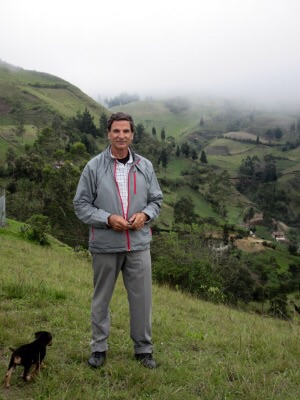
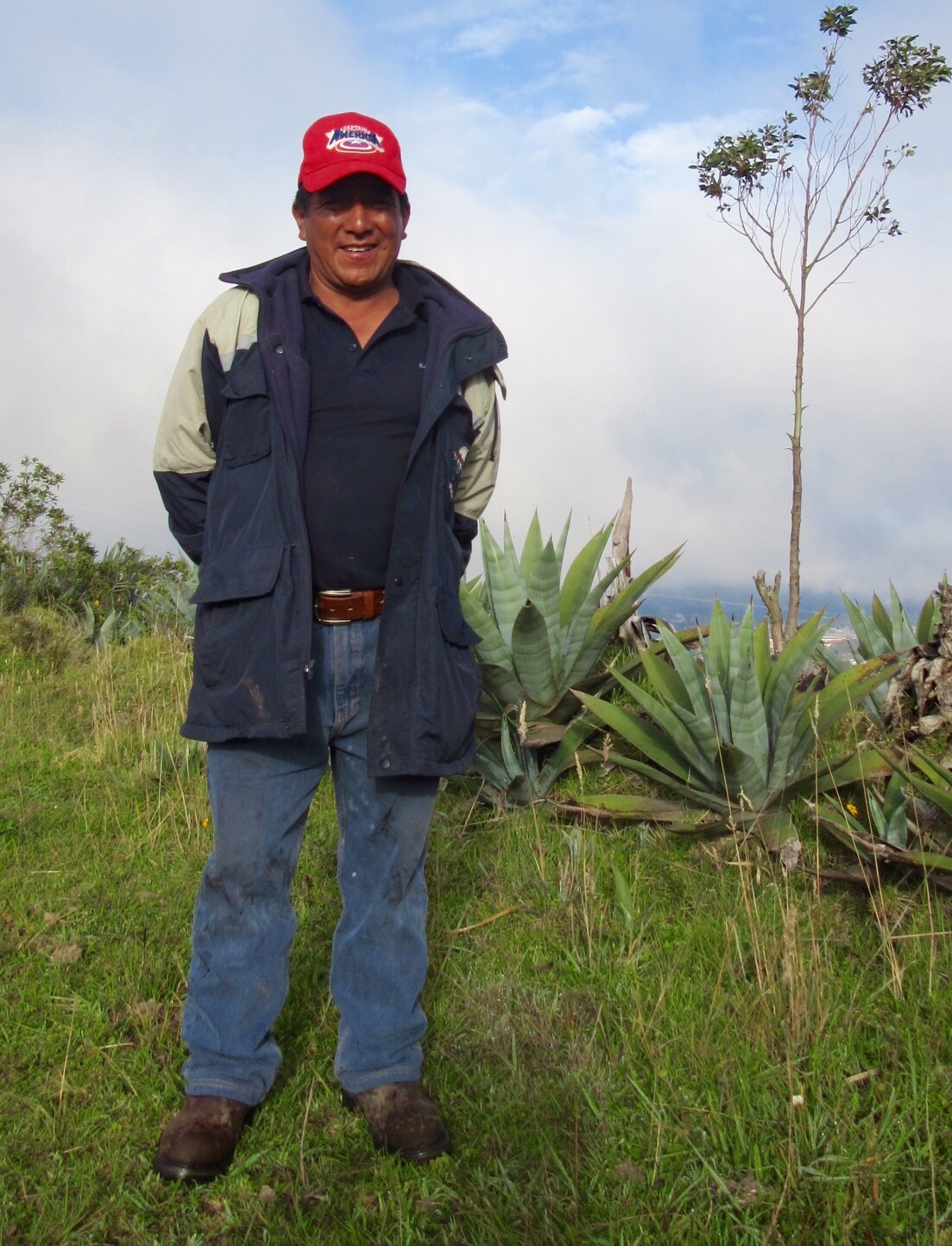
Jefferson Moposita, a 25 yr old Mechanical Engineer

Jefferson Moposita, a 25 yr old Mechanical Engineer

I admit that I played a small part in continuing the melody, and my foot still hurts one week later, from crunching a stone in pitch blackness. But by now, after dinner had settled and the beer pretty much gone, it was pure Blue Bird and we were just about ready to get started on phase II.

End of Part II

A Simple Recipe for a Religious Experience

imageWith just eggs, flour, and water, and perhaps some help from a little bird, I experience religion in its most basic form.

Part 1: Gimme That Ole Time Religion

Chimborazo sits in the clouds, with its head rising more than 20,000 feet above sea level. Only on rare occasions will it allow us a brief view, and at that, usually only for minutes at any one time. Yet on these rare times of peek-a-boo visibility we can feel how much its presence determines the life around it. The volcano creates the weather for many miles in all directions by trapping moisture from the heavy clouds as they pass by, then collect on its flanks, and finally disperse and pass on. The surrounding lands accept these concentrations of moisture and provide the people who live here with truly abundant harvests of fruits, vegetables and dairy produce from the lush green fields.

Guaranda, at the base of Chimborazo, is the capital of Bolívar province. This city of at best 50,000 people hosts what is considered to be Ecuador’s most authentic indigenous pre-Lenten Carnaval. Both Ecuadorians and visitors alike reserve beds as much as a year in advance for this most important of religious events. Not only does this Carnaval mark the start of the Catholic religious period of resurrection with its culmination at Easter, but it marks the New Year for the indigenous Kichwa who inhabit not only Ecuador, but the other Andean countries of Colombia, Peru, and Bolivia. The crowds of spectators (and boundaries blur between spectators and participants as events progress) fill every room in every hotel both in Guaranda and in the surrounding pueblos.

So when I received an invitation to attend the Carnaval, less than a week before it was to take place, I had serious doubts about pulling this off. Firstly, my grasp of Spanish is now less than basic. After 3 years of not practicing the language, I discover daily that I have forgotten more than I remember. Thus my Spanish teacher certainly earns her salary, trying mightily to create her own version of the resurrection: my ability to converse again with those around me. The best of luck to you, Raquel Davalos!

The second obstacle (and the more immediate one) to witnessing Guaranda’s Carnaval was the simple fact that all rooms in all hotels, hostels, boarding houses, and elsewhere were full. There truly was no room at the inn for this traveler.

Yet somehow I found myself totally immersed in the indigenous New Year living with the Family Moposita, having arrived in Guaranda by a 7hr bus ride in horrendous traffic. I was traveling with their youngest son Joffre. He and I have become fast friends in Quito where we exchange language lessons. Joffre, or Jefferson as he prefers, is a mechanical engineer. But he is unemployed because he cannot speak passable English. So we meet most days of the week and laugh a lot, and hopefully benefit each other by speaking our respective languages.

Jefferson’s father is a plumber in Guaranda.  His mother, who only wears the traditional dress of Bolivar province and speaks her Spanish with a heavy Kichwa accent, seems to have taken, along with her husband, lifetime vows of poverty. They live in a partially completed house with an outside hose-bib for water and single light bulbs, precariously wired in several rooms of the unheated concrete and block house.

They live this way in apparent content, with Jefferson’s mother enduring bitter cold by cooking outdoors in a semi-walled area open to the skies. She cooks simple but delicious meals over a kindling fire and I never saw her once without a smile. They live this way by choice since rather than investing in their own comfort, they have chosen instead to invest in their children.

Anita, the oldest daughter, is a physician working in a clinic in Quito and expecting her first child. The youngest, Sandra, has just completed her first year of construction engineering at a private university, also in Quito. The 3 other children, each married and 2 of them with children of their own, live in Quito as well, which meant that this was a great homecoming, with all 6 children, 4 spouses, 2 grandchildren, and an old gringo filling the usually empty and very cold house.

We had all come to see the Carnaval, but first we had to acknowledge and celebrate the New Year. And that’s when the little blue bird really did fly up my nose.

End of Part 1

Altitude or Elevation?

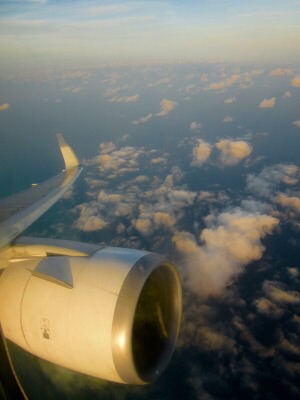
If you squint, you still won't see Cuba, but the sun is setting as we fly over the island on our way to Quito.

If you squint, you still won’t see Cuba, but the sun is setting as we fly over the island on our way to Quito.

Most people use the two words interchangeably, but they’re not really the same. If you find yourself aloft, in a jet plane leaving the US for a South American adventure you are at altitude, a certain distance above mean sea level. When you are standing on firm ground and this happens to be a noticeable height above that same level of the sea, you are at a certain elevation. In spite of that distinction, what laid me out in a hotel room for 4 days when I first arrived in Quito, is commonly called “Altitude Sickness” and I can assure you that no matter what you call it, the symptoms are not  pleasurable.

Having first experienced the malady when I was 19 and climbing Mauna Loa on Hawai’i island, I have since had altitude sickness several times. So I knew that Quito would be a problem. I’ve been living in Honolulu for the past 2 years so any tolerance I built up from living 30 years in New Mexico is gone. Landing in Quito hit me hard and I immediately reached for the medicine bottle. Before leaving I had subscribed to a local travel medicine service, and in addition to updating pertussis, hepatitis A&B, tetanus and typhoid, I also received a generic form of Diamox, the standard medication for relieving the symptoms of altitude sickness. And these symptoms, like symptoms of many other maladies are described as “flu-like,” a description that I’ve never liked.

So after 3 days of Diamox dosing (starting 24 hrs before leaving Tampa) I was feeling no better and actually feeling a little worse. It was time to do what people of the Andes have been doing for many centuries, start drinking Mate de Coca, or coca tea. It’s from the same plant that cocaine eventually comes from but has none of the narcotic effect of the highly processes and chemically tainted cocaine of ill repute. Within 15 minutes of drinking my first cup, the splitting headache was gone, my breathing was less labored (but don’t kid yourself, 9,300 ft elev. is still home to very thin air), and overall, my energy returned to a more normal level. Sometimes the old ways will always be the best.


Nosing Around Quito

image

This bench, and 2 others like it, is located less than a block from the South American Explorers Quito Clubhouse, where I am staying until Sunday, Feb 1.

The 2 pickpockets scurried across Av. Rio Amazonas during a lull in the heavy traffic. Just before reaching the curb they split up, with one fast-walking ahead and the other inserting himself in the flow of pedestrians a few steps behind me. Seeing them for what they were, I immediately turned toward the street and maneuvered myself close behind the trailing thief. I closed in on him and when he realized what happened, he kept looking back: over one shoulder then over the other. It was my first morning in Ecuador. WELCOME TO QUITO, GRINGO!

There are a few things to note about this little episode. The first is that Quito can indeed be a risky place. But having grown up in Detroit, I learned early on that Motown was no picnic either. It was pure luck that I saw these slimeballs and I’m no Captain America with danger radar protecting my every move. Although since then I have not seen anything that could vaguely put me in harm’s way. But that also means that I don’t walk down the street swinging an expensive camera, wearing a pair of cargo pants stuffed with expensive toys. I also don’t stop on the street to puzzle over a map.  Quito is really no less safe than any big US city, but you just don’t advertise your wealth; this is the capital of a developing country and few Ecuadorians have the financial resources that travelers have, so don’t flaunt what you don’t want to lose.

What I have seen this first week is a fantastic variety of produce, and the SuperMaxi, a be-all grocery store in the elegant El Jardin mall offers easily 2 dozen more fruits that one could buy at the local Safeway back home. I’m drinking raspberry or blackberry juice every morning and papayas are less than 1/2 a buck a pound.

Goodbyes are never easy

I bid farewell to some very dear friends today. Ones I’ve known for 40 years and more. Good times, bad times, true friends always come through and mine have always been there for me. But to be honest, we’ve grown apart in recent years. My health has declined several notches and so I don’t do as much with them as I once did.

My vision has declined to the point where I needed to replace the lens in my right eye last May. I only have vision in that right eye, so the procedure was a pretty big deal.  And I had to choose between being able to see well at distances or see well up close. Artificial lenses don’t have the capabilities that we were born with. If both my eyes worked I could have chosen one of each type of new lens, switching between eyes to see both near and far. But I don’t have that luxury with just one eye.  Which prompted me to chose and I gave up the ability to see well at close range and now my  friends, my tools (thousands of dollars worth if I were to replace them) are no longer of any use. While I can focus somewhat at close range, using high strength glasses, I have no depth perception with this new lens and now building, repairing, replacing all the things I’ve done in the past is no longer an option. After decades of using my tools daily for putting food on the table and a roof over my head, we have gone separate ways.

But through the tears, and I can tell you stories about every hammer, screwdriver, pliers that I have, there is a happy ending. One of my nephews has just been selected to be a trainee pipefitter, and he appreciates a good tool. For Christmas, I gave him all I have and we are both the better for it. Now my old friends can keep my nephew’s eventual grandchildren in good company. It’s a proper fit.

This past year, recovering from a near-fatal overdose of a tainted medication, followed by a near-fatal hospital stay where I contracted a serious hospital-borne infection, I decided that it was time to visit South America. A corollary to that decision was the decision to reduce my belongings to a single suitcase. The thinking being that when I croak, why not make it easier disposing of my remains by not having many remains to dispose of? So I have a goal. I am now more than 90% there compared to what I owned less than 2 years ago. AND IT FEELS GREAT!!

In 2 weeks I leave Honolulu and I will be arriving in Quito, Ecuador late in the evening of the 23rd of January, 2015. This is my first entry on this new path. You’re invited to come on along. I think that together, we can discover some of the wonder of Latin America.