Monthly Archives: March 2015

Cuenca, for a While Only

The Gran Hotel, 3 blocks from Parque Calderón, the center of the Historic District, has a delightful interior courtyard. Like the majority of buildings in this old section of town, the courtyard here is hidden from street view, but once inside, we are treated to a jungle of plants, some as high as the 2-storey enclosure itself.
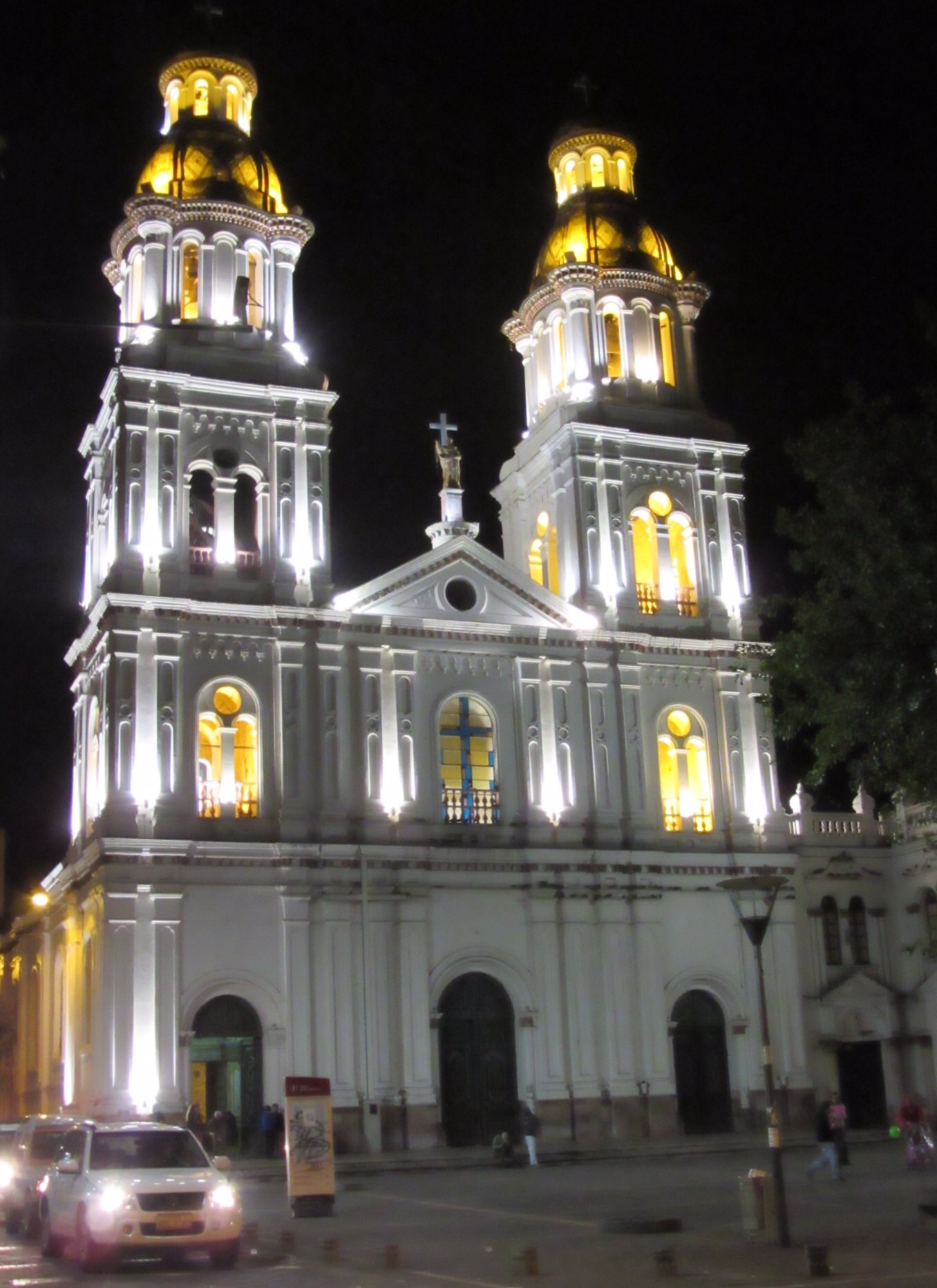
imageBoth breakfast (included with the room-rate of $35/night) and the 4-course lunch ($3.50, no tipping allowed) are served here from 7AM until after 2PM. I’m here in-between the 2 meals, wondering how they will remove the body from the 2nd-floor room before lunch.

Since all the rooms front the courtyard, the platoon of EMT’s, local and state police, and the criminalistics team, along with the hotel staff are working out the logistics. I’m sitting off to the side at a small table watching the staff move the dining tables for what appears to be an over-the-rail descent. Really, it’s a front-row seat and unless they tell me to move, I’m here for the duration.

Two hours ago, while finishing up a late breakfast, I heard running feet from the floor above and looked up to see the First Responders entering the room. Shortly after, the initial cadre of police arrived, and then later the CSI group. I knew from the lack of urgency that whomever was checked into the room had left for good and now it was time for all the paperwork.

I can’t help but think of Sir Terry Pratchett, who just died a few days ago. It’s been 15 years since I was introduced to his “Discworld” satires, and if I haven’t read all of his several dozen books in the series, plus other similar works, it’s not from lack of trying.

But Cuenca is far more than dead bodies. It’s now Friday and Frank and I arrived here in Cuenca on Monday. We’re flying back to Quito Sunday morning with Frank returning to the US early Monday morning. So we still have some fascinating sights to take in.

image

This is a very interesting city and like Quito, selected as a World Heritage Site. Cuenca is Ecuador’s 3rd largest population center, at about 1/2 million people in the city proper, with an extensive suburban development.

This beautiful city, with 4 rivers running through it and defining it’s internal boundaries, is regarded as the cultural heart of Ecuador. It’s easy to see why, with 3 major universities, both an old (16th century) and a new (19th century) cathedral, plus a dozen or more beautifully preserved churches, period buildings with balconies like those in New Orleans (or France, for that matter), museums, Inca ruins, and more. Cuenca is a delight to the eye. In fact Cuenca is such a delight that I’ve concluded that I cannot live here.

Since we got here Frank has developed a passionate love-affair with the city and he plans to return with his wife for a visit very soon. With it’s bite-sized colonial district that can be walked end-to-end, both north-south and east-west in less than a day, and with a climate far friendlier than Quito’s, Cuenca seduces very easily. And that is my problem.

Sometime in 2009 Cuenca was selected as the most desirable retirement destination in the world. This singular prize, decided by any number of international living periodicals, and seconded many times since by other publications has not gone unnoticed by an ever-growing number of expats. Earlier this month the federal government released its figures of approximately 12,000 expats living in Cuenca, with about 8,000 of them from North America.

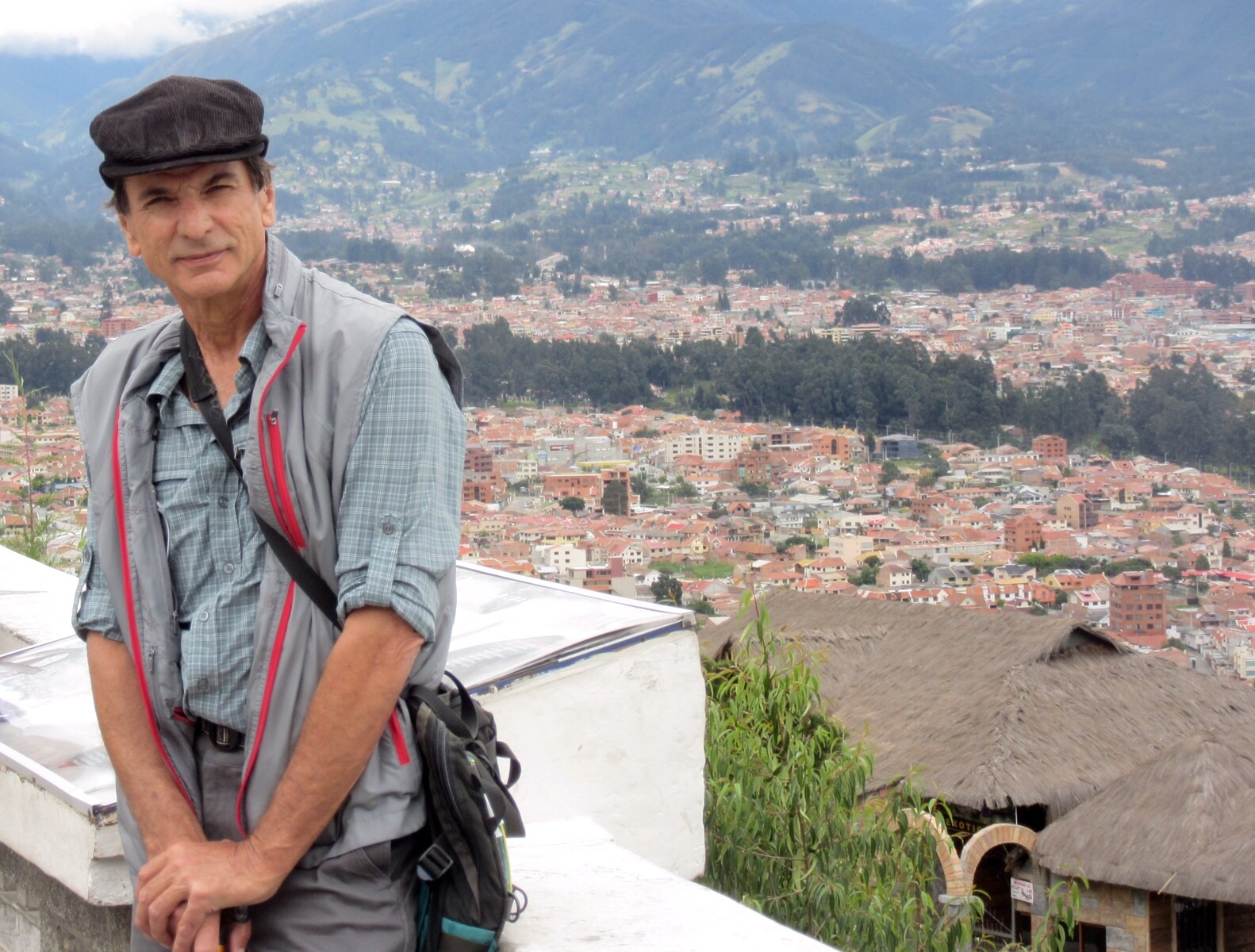
Yet walking the Historic District, or limping along with a cast in my case, some things catch my eye. Perhaps the decades I’ve spent in Honolulu and Santa Fe have soured my soul towards hot tourist destinations, I don’t know. But here in Cuenca I feel a distinct division between the expats and the local population. There is a palpable disconnect between the 2 communities even though they trod the same paths. It’s as if a colony of ants and a colony of elephants occupied the same land, with both populations busily going about their business and not a clue that the other colony exists.
image

I realize that this is a gross over-simplification, but it feels real to me and I don’t want any part of moving here. Though the 2 of us dropped in on 3 very competent Spanish language schools to see about enrolling in their immersion programs, I just can’t do it. All 3 are within 4 blocks of each other, a few blocks from the hotel and the central plaza as well. It feels as if I would suffocate from the claustrophobic closeness of everything. And living with ants and elephants is not something I would willingly do.

Would I come back to Cuenca for a visit? In a minute! The place is gorgeous and known for some of the best food in the country. Its venues host world class symphonies, dancers, writers, painters, sculptors and much more. But I prefer losing myself among the millions in cold and rainy and chaotic Quito.
image


Language Immersion in Quito

Terracentro Spanish Language School

It’s not like I’ve been putting this off, but with Guaranda and all, I just got side-tracked. Though now that I’ve just finished my 5th week in a Spanish language immersion program, it’s time for a review. I just ended one program and I’m set to begin a new phase.

Firstly, I have to say goodbye to Raquell Dávalos, my cultural, historical, environmental, and, when I couldn’t avoid it, Spanish teacher. Raquell has headed off to a teaching contract in El Oriente (the Ecuadorian part of the Amazon headwaters) for 2 weeks. All the best Raquell! It was 5 weeks of in-depth exposure to the wonders of Quito.  I could not have hoped for a better profesora.

OK, really, it is now time to buckle down and truly feel, not just know intellectually the difference between Por y Para , the rough Spanish equivalents to the English For. Wait! Let’s put it off some more; first let’s take time for some diversion. I can always study later.

I’m going to meet Frank, coming in from Albuquerque late tonight, and we’re headed to the southern part of the country for some genteel mayhem. It will have to be toned down simply because I’m sporting a plaster cast from mid-calf to my toes on my left foot. I broke the outside metatarsal by looking up when I should have been looking down.

So, with cane in hand, I lead Frank to Cuenca, Ecuador’s 3rd largest city. Like Quito, Cuenca is a World Heritage Site, selected for it’s colonial architecture, postcard setting, many museums, and because it’s just simply a beautiful place. More of Cuenca later, in a separate post.

I stumble back in a week to change my program at the school. Since starting at Terracentro in the beginning of February, I have been enrolled in “Cultural Quito” a stunning introduction to the charms, secrets, and thousand year old history of this amazing city. This program puts the student in class, one-on-one with an instructor in the mornings, then during the afternoons we were riding buses, taxis, and mostly walking in, through, and around some of the museums, markets, churches, cathedrals, historical sites, and so much more, both in and also near to Quito. It’s a good program; no, it’s a great program, but really it was not right for me. And I knew it even before I left Honolulu.

So sue me, that’s the way I am: if moderation is good then it stands to reason that overindulgence must be better, right? Tell that to the broken metatarsal.

It’s been almost 3 years since I bowed out of Spanish classes in Albuquerque: to first remodel the house, and then to sell it to return to Honolulu. Three years is a disastrously long time to be away from a 2nd language that I had certainly not mastered before the hiatus. I knew this, but the thinking was that I would only be in Ecuador for a month or 2 and I wanted to pack as much as I could into that time, so taking a cultural program without remembering basic grammar was a good thing, no? Ahhh, No.

I have no real idea how Raquell put up with such a poor student other than because of her deep love for her native Quito. And the fact that she shares a cynical view of the world. If this old gringo wants to blow his money by tripping over first-semester verb tenses, at least we can have fun. So we did.

Every day for 5 days each week for the full 5 weeks we saw something new and wonderful. Which was after she made me pay for it by squirming from her stare in the classroom.

imageShe’s got a certain sadistic side that hides behind an innocent smile, a smile that speared me daily with questions about how could I possibly ever think to use a first-person present tense ending on a 3rd person past tense verb? Even children don’t speak like that! Yet in spite of myself I have made progress and look forward to the new program. I will spend 5 or more hours in class each day with no more sight-seeing, so that I can really build a strong grammar base to use in this truly expressive language.  ¡Que Bueno!

Two weeks into my cultural program I realized that I need to be in Ecuador for more than the standard 90-day visa allowance. The culture, the language, and most importantly, the people of Ecuador demand (though politely, to be sure) a deeper commitment from me. And I willingly accept this, so I am working with a lawyer to extend my visa to 180 days. Will that be enough? Of course not, but I really do want to see other Andean countries too.

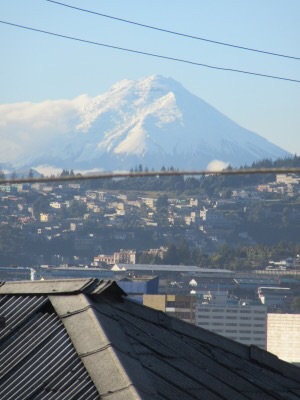
Cotopaxi from my 2nd storey bedroom window

Cotopaxi from my 2nd storey bedroom window

The other part of an immersion language program expects that the student will live the language outside the classroom, and what better way than to live with a family? In my case, I believe that I have the best of all worlds, since I live right here, at the school, with the Director’s parents. Carmen and Hector Villacís are about my age and they have both welcomed me into their home, into their kitchen, and I dare say into their lives. Carmen is a retired banking officer and Hector is a journalist, a Periodista.

Having lived in Long Beach, California for several years while earning an accounting degree, Carmen speaks pretty good English and we, against the rules, often default back there when my Spanish flounders. We spend breakfasts and dinners here at the kitchen table, while I go out for lunch on my own. She’s an avid listener to talk radio, and it’s usually the basis for a protracted breakfast, with heated discussions along the way. Strong into women’s rights, she has little patience for weak-willed, macho politicians. And let’s me know it, often.

Hector, who teaches an advanced arts and politics program for his daughter’s school, speaks no English. Yet somehow, he and I have had any number of 3 hour discussions with both of us enjoying them immensely. He is widely traveled, particularly through Latin America, and has worked for 40 years in radio, in television, and with the printed word, spending decades both in front of and behind the microphone. He has a life-long love of the arts and knows Shakespeare and Tchaikovsky and Velázquez far better than most. He currently writes for a political publication and here in Ecuador these days, that’s not easy.

Well, that’s what I do with my time for the most part. Yet I haven’t explained how I chose Terracentro, one school out of 200 Spanish schools in Quito. And that’s because I haven’t told you about the South American Explorers Club. That might have to wait until after the Cuenca post.

Guaranda, Finally. But Never What We Think

Guaranda, Part III

With the coming of the New Year, as it had been in many of our “developed” cultures in times past, each family of the Campo greets the other families wishing them well, and this year the Moposita family was the first one out of the shute, as it were. It must have been 10 or 11 in the night when we began this New Year’s version of the custom of serenading the surrounding families. Keep in mind that we had been flying with Pajaro Azul since mid-afternoon, so it took major commitment from the entire goup (5 of us) to hang together on pitch black footpaths or trampling through cornfields, finally stumbling into courtyards of the families nearby. As soon as we arrived, though not silently what with the barking dogs, honking geese, and our own laughter, we began to sing and play this song. Or, in my case since I didn’t know the words, kind of hum and moan and clap my hands, which actually I was pretty good at. Well, that’s how I remember it anyway so I’m sticking to my story.

The other part of the tradition requires that each of the families being serenaded bring out yet more cerveza (beer) and/or Pajaro Azul. This being the campo, and like virtually all farming communities worldwide, folks are early to bed, early to rise. So when the lights turned on in the houses we visited, and the head of the household appeared in the courtyard with a glass and the booze, imagine his, or occasionally her, surprise to see a gringo in the midst of the neighborhood troubadors! Most were quite taken aback, and one or 2 even stumbled in surprise, but none paused in pouring out salutes to health and good harvest. A good time truly, was had by all.

Yet while the campesinos had either started or were soon to start celebrating good fortune and bountiful harvest in the new year, it was anything but good fortune for the pig. His year was starting out badly and went downhill from there.

Jefferson’s father had arrived home well after midnight, having begun the celebrations with friends in other places. We had brief introductions as I was headed off to bed. He seemed to be struggling with the remembrance of just why this tall gringo was standing in his house. He wasn’t angry by any stretch, the Blue Bird sings songs of love, though he was sorely and profoundly puzzled.

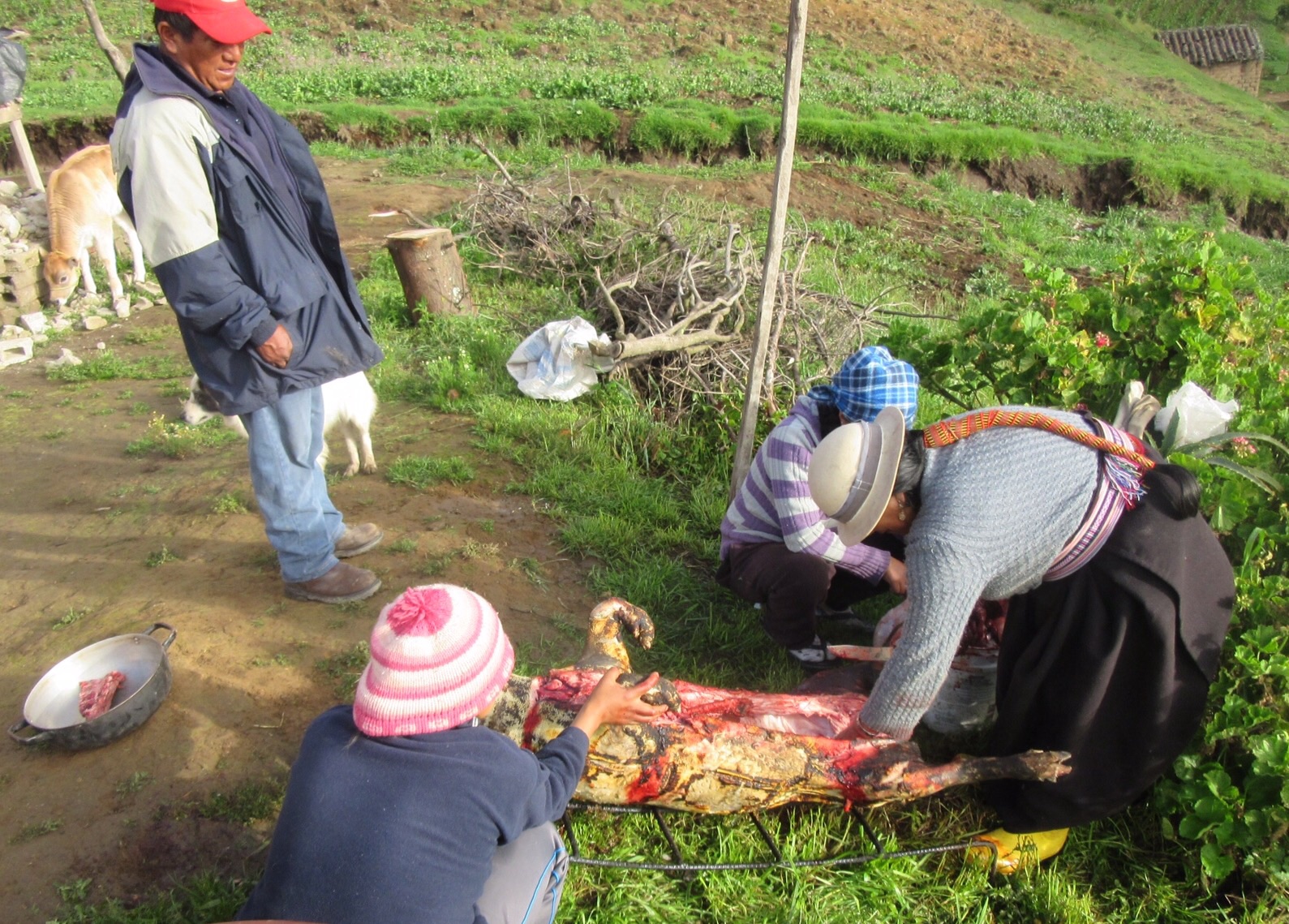
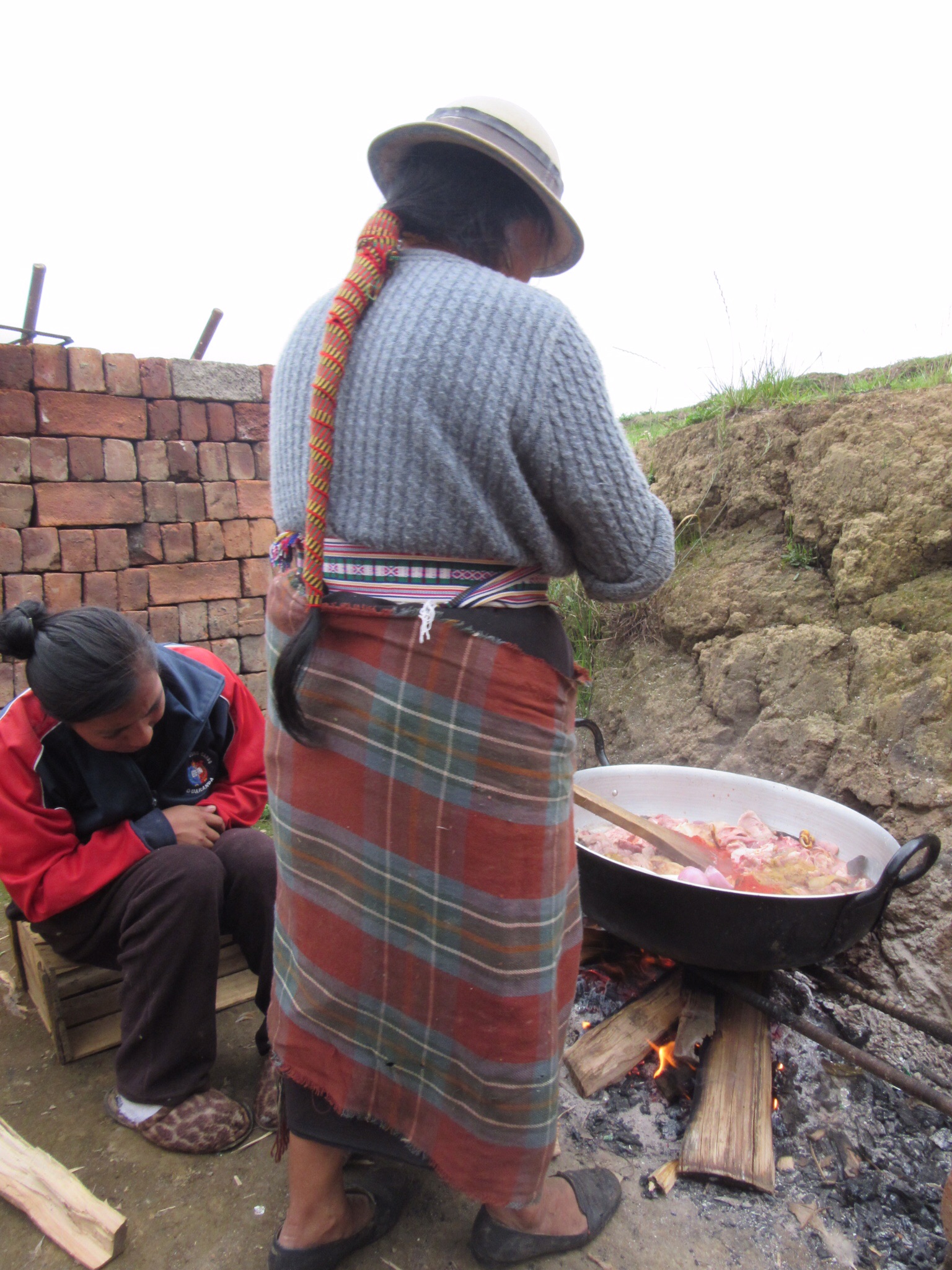
But while I was soundly asleep, snoring and drooling, he was sharpening his killing blade. After the deed, and the singeing of the hide with his plumber’s torch, his work was done and the women’s had just begun. His wife began first by scraping the hide, gutting and then sectioning the carcass. She, with help from an ever-changing number of daughters, spent most of the day first butchering then cooking the pig in a gigantic wok-type of pan/pot/whathaveyou.

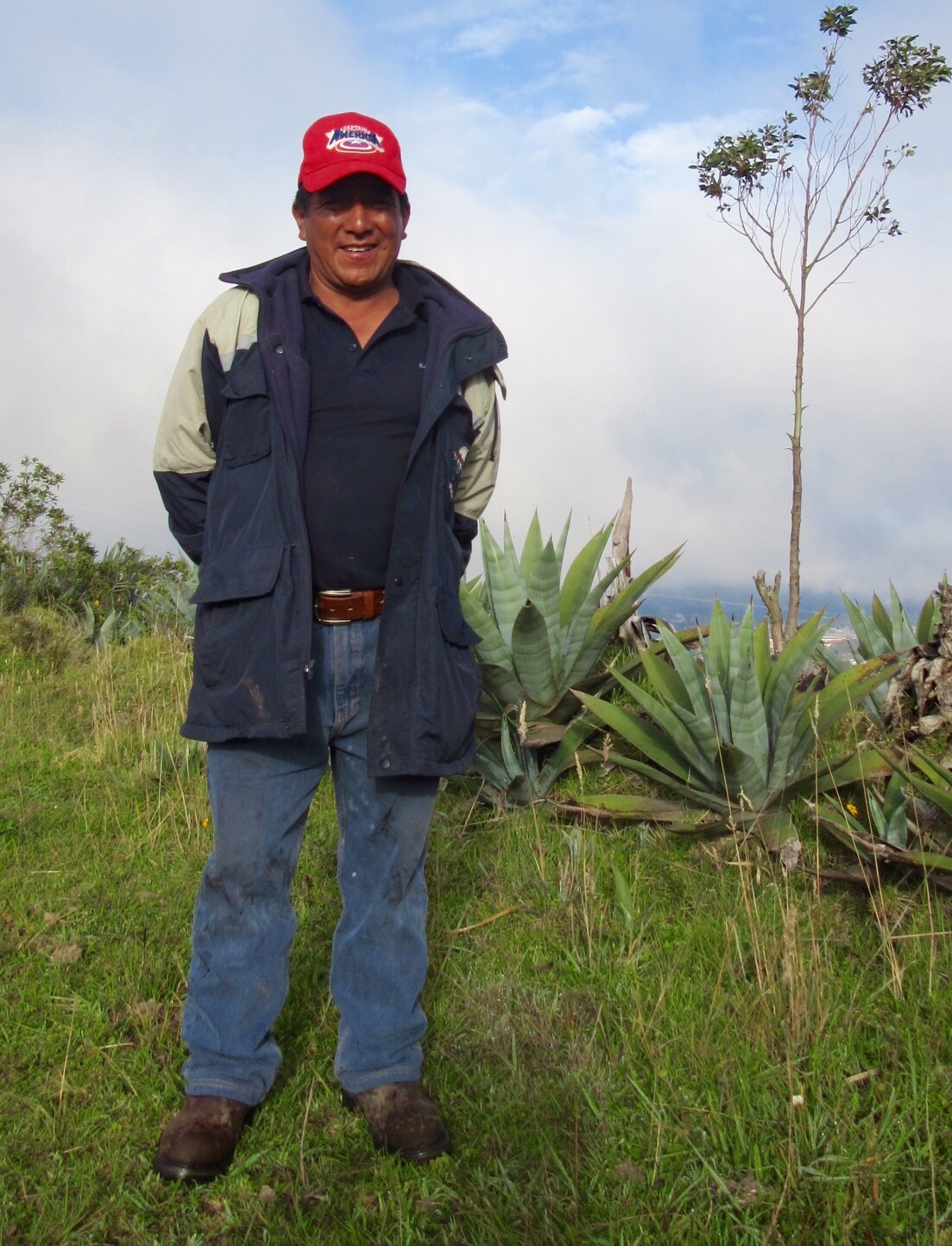
imageWhile she was building up steam for the task ahead, Jefferson’s father (I never did learn the names of Jefferson’s parents) took me with him for an early-morning wake-up over at his neighbor’s place. As we walked over there, he explained to me the purpose of a gulley that was obviously hand dug along the top of the ridge we followed. I had seen it earlier and thought it curious since it appeared to me as if it were a revetment, designed for fending off invading barbarians. The reason, though not so exciting, was still interesting. This ditch is the traditional way for the indigenous families to mark off boundaries between their separate properties. I’m thinking that few of the lands here are registered with any governmental agencies, and surveyors be damned, so this is an effective way for clear and permanent delineation between neighbors.

image

At the neighbor’s house we were offered the red-eye special: fried chitlins in choclo with an aji salsa that cleans the rust from your pipes, washed down with, of course, more booze! Choclo is one of about 7 different types of corn grown in Ecuador. The kernels are huge, the spherical size of a nickel or so, and the aji (pepper) salsa is unique to each family and having grown up with hot and spicy food, hit the spot. Beer for breakfast? Not so exciting, but customs in the hills developed for good reasons and it was not for me to question.

image

Back at the house the family was split into 2 factions with one group up to their elbows in pig and the other group getting ready for Guaranda’s Carnaval. As the honored guest, my role had already been defined before I even arrived from Quito, so I boarded another death-ride taxi for a pell-mell dash down the mountain to town. By now it was mid-morning and the parade had already begun. So we squeezed in amongst other revelers to take in whatever happened next.

And what happened next was a traffic jam. A mile from town the dirt road, and all the other ways into Guaranda were blocked. Cars, and more often trucks, handcarts, and the ocasional dumptruck(?) were haphazardly stacked up, one behind or beside the other, so we abandoned the taxi and boosted the children on our shoulders, making the last part of the trek on foot. The city streets were awash with parade-goers and certainly the party was in full-swing.

Before leaving Quito, my host family had provided me with an image of mayhem and wild destruction awaiting the unwary wanting to see a true Andean Carnaval. And in the years past, when both my generation and ones following took part in the festivities this was truly the case. But Ecuador has cleaned up its festivals so in comparison to days past this Carnaval was almost genteel, though not quite.

People of the Andes have for centuries marked the new year with blood all-round. The killing of the Moposita Family pig was certainly part of it, and from the squeals coming from other campesino family compounds it was easy to tell that they too added their parts to the rituals. Though community Carnavals are where this is most evident.

In days past, and still in many parts of Peru and Bolivia, ritual blood-letting was/is not only accepted but strictly enforced. Rival teams of men and youth would confront each other throughout the Andes and trade blows to the head with the expectation that resultant flowing blood would supply Pachamama with the energy she needs to ensure the harvest of the New Year. I’m glad that, at least in Ecuador and Colombia, things have toned down a bit.

imageHowever I was warned that instead of flowing blood I could and should expect raw eggs along with flour missiles and water bombs. So I came prepared, decked out in full-body rain gear, virtually head-to-foot in rubberized clothing. Man, was it hot! Well this year, the eggs are gone, the flour use is pretty trivial, and what is the weapon of choice, excuse me, the expression of joy, is shaving cream; boatloads and boatloads of shaving cream. But not your store-bought Schick or Gillette cans of personal grooming.

There were hawkers parading up and down the street between us, the beer vendors (by the glass or the case), umbrella sellers, and the actual parade participants, selling aerosol cans 18-24” high, and packed with high-pressure shaving cream. These cans allowed the gunners using them to float a focused stream of shaving cream 20 or 30 feet into the crowd. Which they did. We, all of us, found it in our hair, faces, front and back, down the back of the neck. Then there were the youths on the roofs of the buildings above us: ready, willing, and quite able to drench all of us with water balloons. And they too did, often and with great accuracy.

image

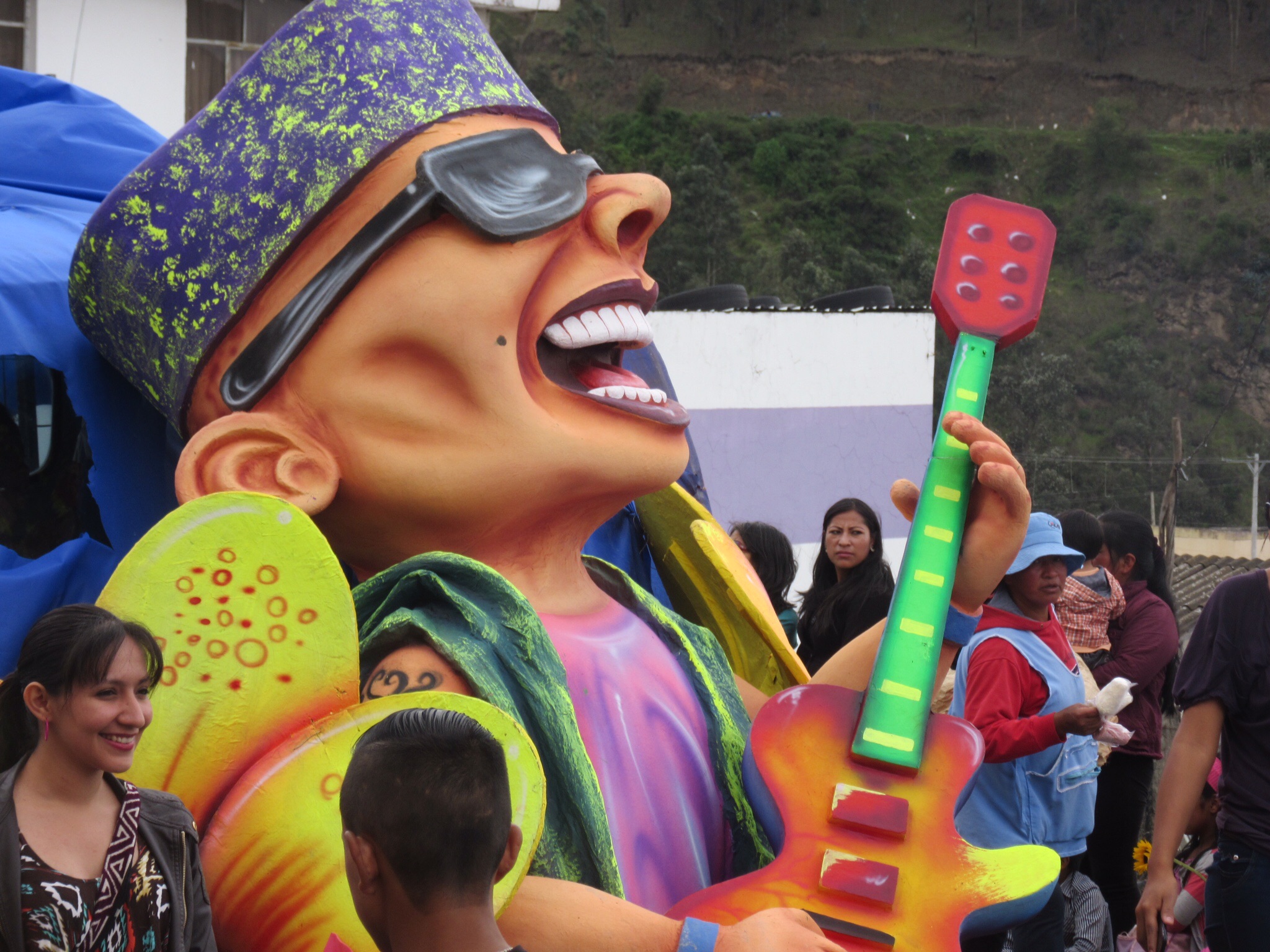
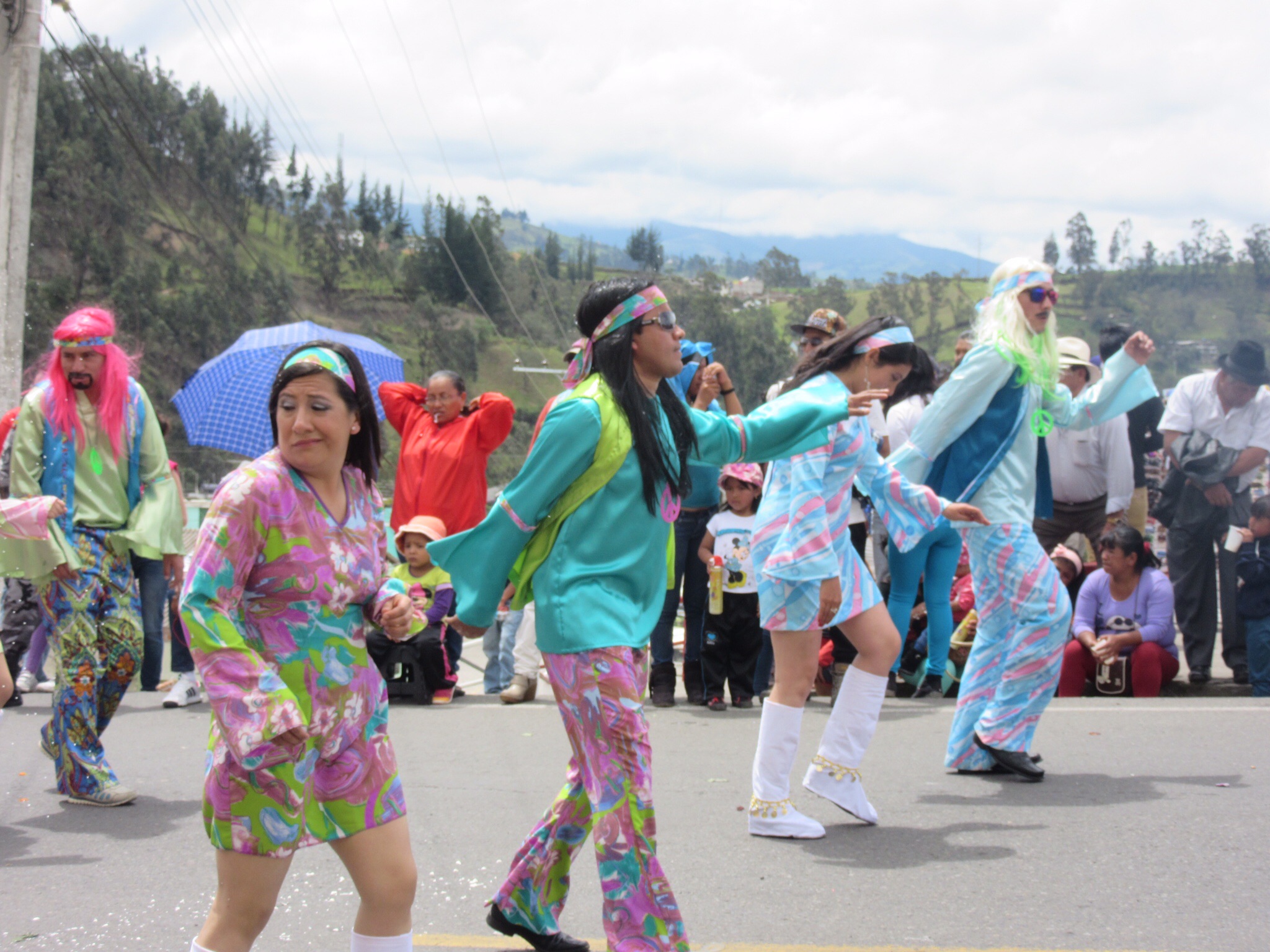
The actual parade was itself almost a distraction from the aerosol snipers, the overhead water bombardiers, and the drunken couples dancing, stumbling and falling to music from the mega-decibel salsa sound trucks slowly driving by. We saw the obligatory beauty-queens, the hand-made floats crafted during the past year by local artisans, and marching dancers. Or was it dancing marchers? We saw groups of made-to-be hippies of the 60’s, with flourescent hair, wearing costumes from the disco 70’s, we saw tractors pulling memorials to the workers’ cooperatives, we saw elite troups of military and police brigades. And then it rained. And then the rain began to freeze. And then it hailed. And with mild panic, the crowd ran for cover, while the bands played on. There was at least one aging gringo who was glad for his full-body rain gear.

We finally squished our way back to the house where we became one with the New Year pig at the dinner table, sang a bit and went to bed early for a 3AM bus ride back to Quito. Since then, as I consider what transpired I realize that though the Guaranda Carnaval was an enjoyable, though truly frigid experience, what was of greater meaning were the events in el campo. It was a true privilege being welcomed into the Moposita Family home. Though I was more than a bit uncomfortable sitting at the place of honor during meals, I knew that each of the family members freely and unconditionally wanted me to feel at home, to be one of them. And really, I did.